

Introduction
In a world where smartphones buzz every few minutes, emails never stop flowing, and screens dominate our waking hours, the concept of a “digital detox” has become more appealing than ever. Many of us recognize the constant pull of technology and the way it fragments our attention. Whether it’s social media, work notifications, or just the urge to Google every random thought, our brains rarely get a break from the digital noise. That’s where camping steps in—not just as a leisure activity, but as the ultimate escape from the wired world.
Camping, whether in a tent deep in the woods or in the comfort of a trailer parked by a lake, offers something profoundly healing. It forces us to slow down, reconnect with nature, and rediscover simple joys that require no Wi-Fi signal. Sitting around a campfire, cooking over an open flame, watching the stars come out one by one—these experiences create a rhythm far removed from the constant pinging of devices. The stillness of the forest or the vastness of the mountains reminds us that life doesn’t need to be filtered through a screen to be meaningful.
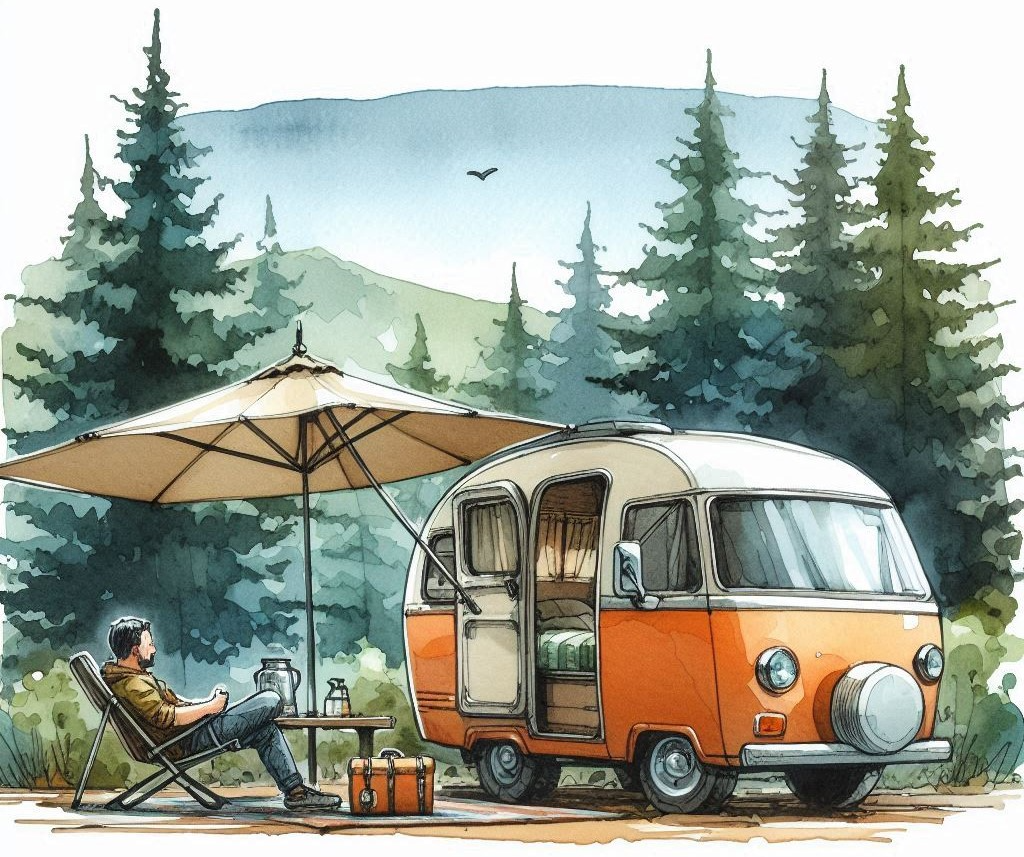
Unlike many other forms of vacation, camping has an inherently unplugged quality. Even if you bring a trailer with modern amenities, the outdoors naturally invites you to put away the phone and look up. Tent camping may encourage a more rugged break from technology, while trailer camping provides a balance of comfort and escape, but both carry the same promise: the chance to reset your mind and body by disconnecting from digital life and reconnecting with the real one.
This article explores why camping is the ultimate digital detox. We’ll look at how it benefits mental health, strengthens relationships, reignites creativity, and restores balance in ways that few other experiences can. By the end, you might be inspired to pack up your tent or hitch your trailer and head for the nearest trail, mountain, or lakeside retreat—not for the Instagram posts, but for the transformation that comes when you truly unplug.
The Constant Connectivity Problem
Modern life is saturated with screens. Studies show that the average adult spends more than seven hours a day looking at digital devices, a figure that doesn’t even count those who work in front of a computer for their livelihood. Notifications have trained us to respond instantly, emails follow us home, and the endless scroll of social media steals hours we never meant to lose. While technology has brought convenience and connection, it has also blurred the lines between work and rest, leisure and responsibility.
The trouble is, our brains were never designed for this level of constant input. The rapid switching between tasks, messages, and feeds fragments attention and increases stress. Many people report feeling exhausted by their devices, yet unable to put them down. We say we want a break, but fear missing out if we log off. The paradox is that what we use to connect with others often disconnects us from ourselves and the present moment.
Even vacations have not escaped the grasp of digital culture. Travelers often spend more time taking photos for social media than actually savoring their surroundings. The pressure to share every sunset or meal online robs the experience of its authenticity. Instead of fully relaxing, people find themselves checking work emails “just in case” or worrying about what they’ve missed while away. The very escape that was meant to refresh them becomes diluted by the same technology they hoped to leave behind.
This is where camping shines. By physically removing us from Wi-Fi zones, cell towers, and the endless hum of the online world, camping creates the kind of digital boundary that is almost impossible to set in everyday life. It gives us permission not to check the news or respond to messages instantly. It quiets the mental chatter that technology fuels. More importantly, it reminds us that the world existed long before the internet and that some of life’s richest experiences happen offline.
The Healing Power of Nature
When you step into the woods, pitch a tent, or set up camp in your trailer by a river, something remarkable begins to happen. The sounds of traffic fade, replaced by the rustling of leaves, birdsong, and the crackle of a fire. The air feels fresher, the sky looks wider, and time itself seems to slow down. Science backs up what campers already know intuitively: being in nature is profoundly restorative.
Numerous studies confirm that time spent outdoors reduces stress hormones, lowers blood pressure, and improves mood. The Japanese practice of “forest bathing” highlights how immersing oneself in the natural world can lead to measurable health benefits. Away from the glow of screens, your brain recalibrates to the natural rhythms of day and night. Your body gets more physical activity, even in simple acts like gathering firewood, walking trails, or setting up camp. These movements release endorphins and give you energy that no digital device can replicate.

The benefits extend beyond the physical. Nature has a way of pulling us out of our own heads. When you’re watching the sunrise over a lake or listening to the night chorus of crickets, worries shrink in size. The perspective shift is powerful. Problems that seemed overwhelming back in the office or at home suddenly feel manageable in the grander scheme of things. By disconnecting from the artificial urgency of the online world, you connect to the timeless calm of the natural one.
Tent campers often feel this immersion more intensely. With only a thin sheet of fabric between you and the natural world, the experience is raw and direct. Every sound, smell, and shift in temperature heightens your awareness of your surroundings. Trailer camping offers a gentler immersion, with comforts like a bed and kitchen, but still provides the same access to fresh air, open skies, and the soothing presence of nature. Either way, the result is the same: your body and mind begin to heal in ways that only happen when technology takes a backseat.
Strengthening Relationships Through Camping
One of the most beautiful aspects of camping as a digital detox is the way it strengthens human connection. In our daily lives, conversations are often interrupted by phones buzzing, notifications popping up, or the distraction of a screen. Even family dinners, once a sacred time of connection, are frequently hijacked by devices. Camping strips away these interruptions and makes space for genuine interaction.
Sitting around a campfire invites storytelling, laughter, and long conversations that flow without the pressure of time. Without the temptation to check a phone, people listen more intently and engage more fully. Families rediscover the joy of playing cards, hiking together, or simply talking beneath the stars. Couples find romance in the simplicity of cooking a meal together over a fire or sharing a quiet morning coffee with no one else around. Friendships deepen when there’s nothing to do but enjoy each other’s company in the beauty of the outdoors.

Children, in particular, benefit from camping as a digital detox. Many parents worry about their kids’ screen time and the impact it has on attention spans, creativity, and social skills. Camping replaces screens with adventure. Kids learn to identify constellations, build a campfire, or discover the thrill of catching a fish. These experiences not only create lifelong memories but also teach resilience, problem-solving, and appreciation for the natural world.
Even when camping in a trailer with modern conveniences, the emphasis naturally shifts toward connection rather than distraction. There may be a television or a radio, but the lure of the outdoors is stronger. Families still gather outside for meals, explore trails, and marvel at sunsets together. The key is that camping creates an environment where togetherness is the default mode, not an afterthought.
Reigniting Creativity and Curiosity
Constant exposure to technology can dull our creativity. The endless consumption of information leaves little room for original thought. We scroll, watch, and read, but rarely give our minds the quiet space needed for ideas to flourish. Camping provides that space.
Without screens to fill every idle moment, your brain begins to wander in the best possible way. You might find yourself daydreaming while watching the flames of a fire or coming up with new ideas as you hike along a forest trail. This mental rest is not wasted time—it is the breeding ground for creativity. Many writers, artists, and thinkers have credited nature as the source of their inspiration, and camping places you directly in the heart of it.
Curiosity also flourishes outdoors. You notice details you might otherwise overlook—the way moss grows on rocks, the patterns of clouds, the behavior of animals. These observations spark questions and wonder, reminding you of the vastness and beauty of the world. For children, this curiosity is especially valuable, encouraging them to explore, ask questions, and develop a lifelong sense of wonder about nature.
Both tent and trailer camping encourage creativity in practical ways, too. Cooking without a full kitchen requires ingenuity. Setting up a comfortable campsite involves problem-solving. Finding ways to entertain yourself without screens invites games, music, art, or simply the joy of storytelling. These activities flex creative muscles that technology often leaves dormant.
Restoring Balance and Perspective
At its core, a digital detox is about balance. Technology is not inherently bad—it keeps us connected, informed, and entertained. The problem arises when it takes more than it gives, leaving us overstimulated and disconnected from ourselves and the people around us. Camping restores that balance.
When you camp, you live by natural rhythms rather than artificial schedules. You wake with the sun and sleep when the stars come out. Meals happen when you’re hungry, not when the clock says it’s time. Activities are guided by curiosity and environment rather than notifications. This slower pace helps reset your internal clock, improve sleep, and remind you what it feels like to live in harmony with your surroundings.

Camping also shifts perspective. In nature, the problems that loom so large in daily life shrink against the backdrop of mountains, forests, or lakes. You realize that the world keeps turning whether you answer that email or not. The urgency of digital life fades, replaced by a more grounded sense of what matters. This perspective is invaluable, giving you clarity that you can carry back into your everyday routine.
By the time you return from a camping trip, you’re likely to notice the difference in how you feel. Your mind is clearer, your body is refreshed, and your priorities often feel recalibrated. Technology no longer feels as overwhelming, because you’ve experienced life without it and remembered that it’s possible—and deeply rewarding—to live unplugged, even for just a few days.
Conclusion
In an age where our lives are dominated by screens, notifications, and digital demands, camping stands out as one of the most effective and enjoyable ways to unplug. It removes us from constant connectivity and places us in an environment where nature dictates the rhythm of our days. Whether you prefer the rugged simplicity of a tent or the comfort of a trailer, the result is the same: a chance to rest, reset, and rediscover what it means to truly live in the moment.
Camping heals the mind and body by immersing us in nature. It strengthens relationships by replacing screens with shared experiences. It reignites creativity and curiosity by giving our brains the space to wander. And it restores balance by reminding us that life exists beautifully beyond the digital world. Each crackle of the campfire, each star-filled sky, each laugh shared with loved ones reinforces the truth that the best connections are not found online but in the real world around us.

Most importantly, camping provides a perspective shift that stays with us long after the trip ends. It reminds us that while technology is useful, it is not essential to joy, peace, or meaning. Those are found in the quiet moments when we put the phone away, step outside, and simply exist in the beauty of nature.
So the next time you feel overwhelmed by the constant pull of your devices, consider packing up your tent or hitching your trailer. Drive to the mountains, the woods, or the lakeside. Leave the notifications behind and embrace the stillness of the outdoors. Because sometimes, the best way to reconnect—with yourself, with loved ones, and with the world—is to disconnect. Camping just might be the ultimate digital detox you didn’t know you needed.